Tuesday, February 28, 2006

He should have got out more: an early modern recluse

Ho-hum: reading again: this time, a posthumous biography of a man who did nothing, but whose culture could find abundant terms in which to praise his doing of nothing:

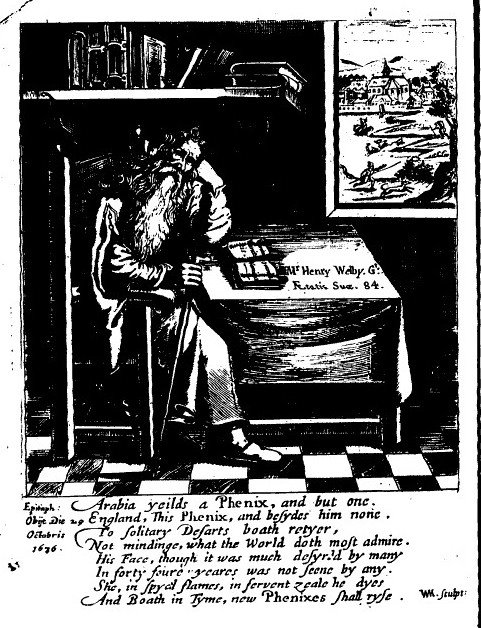
The Phoenix of these late times: or the life of Mr Henry Welby, Esq. who lived at his house in Grub-Street forty foure yeares, and in that space was never seene by any… whose portracture, you may behold, as it was taken at his death (1637).

Henry Welby lived, for the last 44 of his 84 years, in three back rooms of his house in London’s Grub Street. He retreated to this solitude after a quarrel, in which a younger brother traumatised him by attempting his murder (a double-charged pistol, which only 'flashed in the pan', was discharged). Up to this point, Welby had been a student, had travelled abroad, married, had a daughter, seen the daughter married. After it, at the age of 40, he turned inward, and thereafter, his biographer asserts, was only ever seen by an elderly maid when her cleaning left him no innermost sanctuary to retreat to. Her death seems to have precipitated his, which followed six days after that of his only human contact in his last four decades.

His biographer was Thomas Heywood, whose abundance of historical anecdotes and facility for moralising allowed him to fill the pages that recount a quite mysterious life. Necessarily sparse biographical details do emerge, doled out with suitable sparingness by Heywood. For Welby apparently existed on oatmeal gruel, salads, bread, and the occasional egg-yoke, while he drank mainly ‘four shilling beer’, which the context suggests must have been of the thinnest kind; just occasionally varied by ‘the milk of a red cow’, brought to him hot from the udder when he made the request.

More remarkably, Heywood asserts that at Christmas and Easter, all the food for a proper feast would be served into Mr Welby’s outermost room, where he dined. This food he would then carve, and send out to be distributed to his neighbours, without his eating any of it himself. This does look like a supreme display of will-power by an obstinate man, one, moreover, who wants his determination to be known.

The next room in from his dining room was his bedroom, and the last and innermost of his three rooms was his study: the recluse was further away in his books than in his bed. Heywood only says that Welby was a scholar and a linguist, and always bought the best books available, English and foreign, but doesn’t give any idea of their precise nature or how they were acquired, whether sent to him on approval or ordered via an intermediary servant. If he forsook the world in 1592, he managed to ignore the whole of (say) Shakespeare’s creative maturity as a London dramatist. He really should have got out more.

Heywood assumes that he spent time praying, and dutifully praises his abstinence and continence. But there is one outburst against this unnatural existence:

Now as touching the solitude of his life, to spend so many Summers and Winters in one small and narrow roome, dividing himselfe not onely from the societie of men, but debarring himself from the benefit of fresh and comfortable aire; not to walke or confer with any man, which might either shorten the tediousnesse of the night, or mitigate the prolixnesse of the day: what retirement could be more? In my opinion it far surpasseth all the Vestals and Votaries, all the Ancresses and Authors that have beene memorized in any Hystorie.

I am amused by the way ‘authors’ appear alongside anchorites as solitaries, and the odd male-centeredness here about the sex a suitable companion for shortening the tediousness of a night.

How the book came to be written isn’t explained. For Heywood, Welby is a wonder, a solitary phoenix, and the book might have satisfied a few nosy parkers and local gossips. Moralisation largely fills the cracks where genuine inquiry might have wriggled into view: Heywood – a dramatist who worked in each of the reigns of Elizabeth, James, and Charles – is devoid of psychological speculation, in the way they all tended to be. ‘What makes a man tick?’ – W. H. Auden seems to have originated the phrase in the 1930’s: in many centuries before, people, even writers, functioned quite adequately without wanting to get at the main spring. It doesn’t occur to Heywood that the murderous brother might have had his provocations: Welby becomes a kind of saint by his long-avoidance of humanity.

The title page portrait is surprisingly well cut, almost as though Welby had, after all, wanted his story to be told, and his long-concealed face to be seen, and left a commission. He looks, perhaps deliberately, like a strange London version of a St Jerome, a bearded saint among his books.

I am clean shaven, myself.

Sunday, February 26, 2006

Early Modern Rabbits!


My last two posts made me think of this rather sprightly broadsheet ballad from 1620, with its woodcut of a small dog in pursuit of a vast and splendidly bewhiskered black rabbit. The ballad seems to have had its own tune, and perhaps the simple woodcuts (there is another, with a hunter winding a horn at the animals) were specially cut: rather a classy job for the broadsheet press. The ballad describes the pleasures of a day of hunting, conducted at its most proletarian level. 'Let your hound/ Range some ground / And swiftly follow him / Hunt the Bunne, take the Bunne / But do not swallow him' goes the refrain. The ballad ends, perhaps rather surprisingly for the period, with a lament for the prey which is no more than half merry: ' So farewell. Yet a knell / I'll ring for bunny / Which was a harmless beast / Poor pretty conney / Ding dong ding, thus I ring / Poor bun is buried / That with so many Doggs / Was at once weried.'
The witchfinder Matthew Hopkins published his The Discovery of Witches in 1647, a pamphlet written in a strange manner for a man who was hanging women as witches on his personal convictions, as it is in the form of a series of cogent objections to his processes (the replies he comes up with are far less compelling). Anyway, the book illustrated witches with their familiars spirits, devils in animal form. One of these is a rabbit, called 'Sacke and Sugar'. Here may be a suggestion of the first owners of pet rabbits. hardly the most demonic of creatures, though it is suitably black. He's at the very top of this posting.
'Bunny' here is another OED antedating, which doesn't record the word applied to a rabbit before a Dictionary of the Canting Crew in 1690. Oddly, they have an earlier use of 'bun' being applied to a squirrel, and 'bunny' as a term of endearment for a woman before any 'bunny'=rabbit citation. The word has no known etymology, but probably evolves in baby talk: 'buns' as a form of cake existed from the middle ages, so then you apply the word to any sweet little creature. Till I looked all this up, I had no notion (never having seen the film), that a 'bunny-boiler' for a jealous older woman stems from 'Fatal Attraction', where the Glen Close character boils a pet rabbit alive as a signal instance of her malignity. Bless the OED, which I can access fully: http://dictionary.oed.com/
~ it does at least offer non-subscribed users a 'word of the day' (and a free 30 day trial!).

Early Modern Advertising


I have been looking at early modern adverts. 'My griefs cry lowder then aduertisement', says Leonato, angry about the 'death' of Hero in Much Ado about Nothing, V i 32. That was how it used to be done: to have your message 'cried in the street', sometimes with a drummer to help the message get heard. Printed ephemera (and I post three headings from single sheet examples), survive as fossils survive, through lucky chances of preservation. There must have been many more species than those that can now be unearthed. These adverts seem to model themselves on royal proclamations, and begin with the ‘Be it known unto all’ formula that the Privy Council would use. If the Crown could proclaim a measure for health, it seems to have occurred to private doctors that they could do the same. Nicholas Bowden, ‘cutter of the stone and also occulest’ (oculist, rather than occultist!) in 1610, lets it be known that he can deal with ruptures, wry necks, cataracts, hare lips, fistulas and difficult childbirths. ‘Those which shall neede of me, shall have me’, concludes his flier.

Salvator Moretto, a later 17th century physician (1647), promises his medical miracles under the pious title, Nothing without God. He leads off on his skills as a dentist and oral hygienist, has a balsam called the ‘spirit of vegetables’ for all kinds of pains, another for wounds, and says he can get rid of the French Pox ‘in a short time, with Gods assistance’. He ‘can also cure many secret diseases which are incident unto women, not fitting to be publiquely named’. Among the other inestimable services offered by this man, he ‘can make hair grow in a short time on a bauld place’.

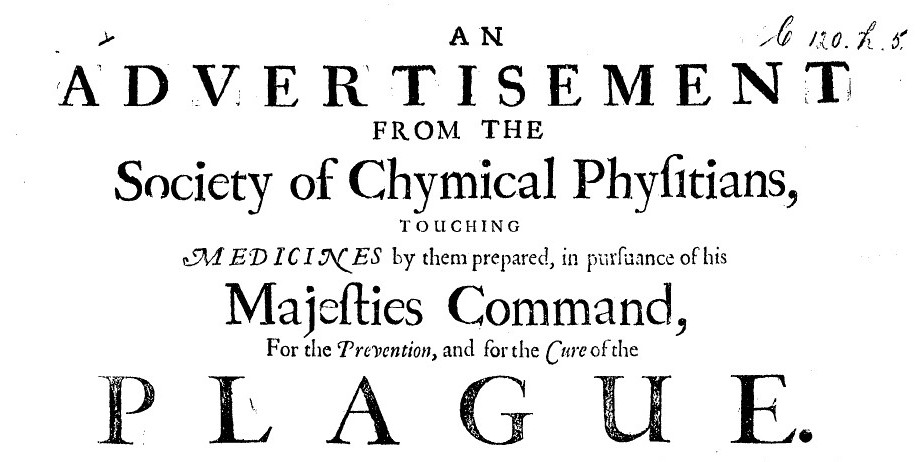
Rivalry was clearly intense: in one of the first adverts surviving for the famous and long-surviving ‘Daffy’s Elixir’, Antony Daffy vindicates his cure-all against the ‘new upstart counterfeiters of my ELIXIR’ (1675). When a controversy settled down, physicians could unite to advertise themselves: An Advertisement from the Society of Chymical Physicians, announces that now it has been agreed that chemical preservatives are effective against the plague, so here are the premises of eight London physicians where an effective remedy against the plague can be had, ‘at reasonable Rates’. From what I have seen of these ‘preservatives’, you might be expected to wear a taffeta bag of arsenic paste around your neck. If you survived the medicine, this might perhaps have been effective against fleas, still accepted as the vector for the plague. This was in 1665, and does not really seem to have done much good in 1666.

Booksellers, with their ready access to publishers, seem to have been almost as quick to advertise. An early advert for the Oxford University Press survives (1680), and a really remarkable one from Richard Wilkins, a bookseller in Boston, who promises to import sought-after titles from Europe (1690). Inventions are announced: Isaac Thomson, ‘his Majesty’s sworn engine-maker’ announces an improved joint for connecting leather hoses to ‘common or Church engines’, enabling a fire to be fought from the rear of a house, and not just at the street-side (1680).

‘Advertisement’ still carries a strong sense of ‘warning’ (the OED's readers missed many earlier examples, and the great dictionary does not have the word used for printed promotional material before 1692) and these documents are often used by people who want to assert their legal rights to an innovation, or property of some kind. William Dockwra, a merchant who had set up a penny post, ‘universally approved, and well known to be a Great and Publicke good’, puts out a flier about his attempt to be re-instated to the business after James II had turned him out of it. Interestingly, the flier has a hand annotation, ‘The Reader is desired not to take away this paper’: another hand annotates the exemplar with the note that ‘This paper was [placed?] in every coffee house in Oxon in the beg. of April 1699’. Presumably this was the kind of circulation that the adverts had, via taverns, or, in the later century, the coffee-houses.

Just occasionally an advert is so bizarre that it seems to confirm the Monty Python view of the past. The Students of the Royal College of Edinburgh announce that they intend to brighten up Christmas day 1689 by burning an effigy of ‘Antichrist the Pope of Rome’ to show their zeal and fervency for the Protestant religion, and warn all ‘Plunderers, Robbers, Thieves, Whores and Bawds’ to keep away from this festive event, ‘under the Pain of Death’. But it is signed ‘Robert Brown, Secretary of State to all our Theatrical and extra-literal Divertisements’, so it looks more like a clever way to raise an early modern flash mob, and may be a prototypical rag week event.

In 1675 an enterprising publisher put out an advert which noted that 'Whereas divers people are at great expense inprinting, publishing, and dispersing Bills of Advertisement', in future, your advert can go into his 'Mercury, or Bills of Advertisement', which will be published every Thursday morning, and be posted through every door in London. And there's your first free 'newspaper'. I'm sure people used to to put in the rabbit's hutch, like I do.

Lupin sends her love

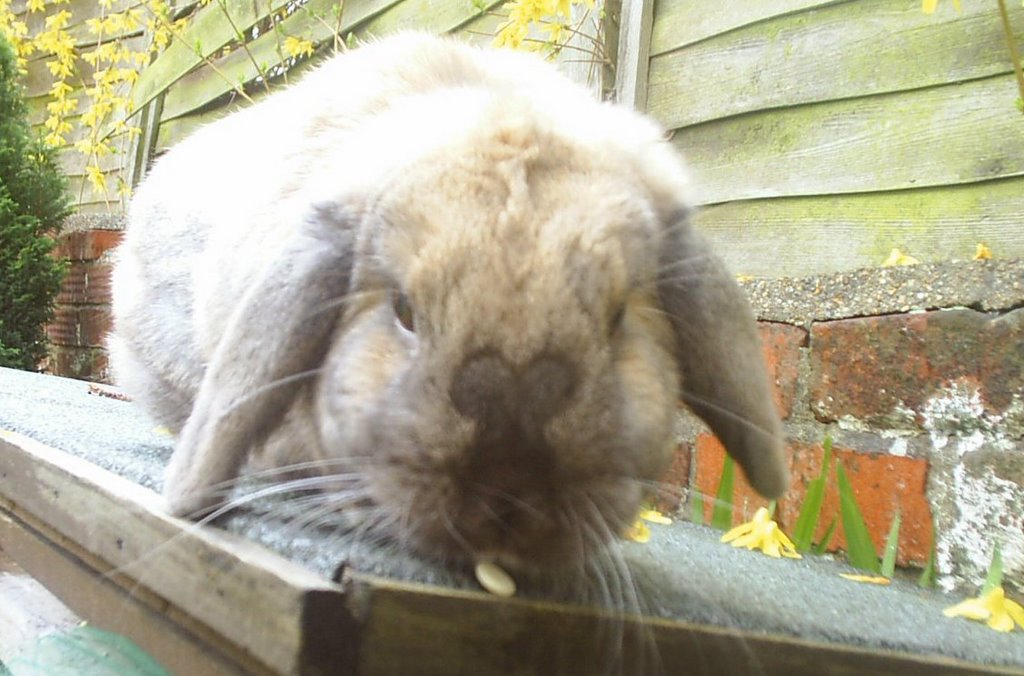
One of Lupin the rabbit's more spectacular moults, for all the world as if she was trying to send a signal spelled out in fur. She is about to ingest one of the yoghurt treats pet shops produce. Curious animals, rabbits, small herbivores with a highly complex digestive system, which deals with the problem of having a short gut in which to break down grass. I cannot understand how the lop-eared variety was bred, as the variant knocks out one of the rabbit's main defensive lines against predation (the other obvious ones being those prominent eyes, and the fall-back strategy of producing an over-abundance of new rabbits). Lupin is not a very intelligent animal. You can see that she just cannot work out how the door into the house sometimes allows her through, and sometimes not. She is, however, immensely curious (intellectual sense), galloping up to observe at the closest possible quarters gardening, or bicycle repairs, anything that happens on her patch. Again, it is hard to see how this curiosity functions in an evolutionary way: it would seem better to react to anything new or unusual by shying away from it. But cows are just the same. Maybe it is a product of domestication, or perhaps in the wild it is better for the group that individuals are impelled to check out potential dangers. If there was one phrase I'd like Lupin to get to understand, it would be 'Get out of the way!' I sometimes attend rabbit shows, but have yet to see that the breeders have started on stripy rabbits (see http://bbc.news.co.uk/1/hi/sci/tech/422674.stm for the stripy rabbit found in the Annamite Mountains of Laos).
Certain animals show that immense plasticity under selective breeding: Darwin bred pigeons, then there are dogs, horses, chickens, cats. The rabbit is a lesser priority, of course, but ranges from creatures like the recently famous Roberto, who is supposed to be 3'6" long and weigh two and a half stone, down to the miniatures. How you could measure a rabbit length-wise, I do not know: they have very flexible skeletons, and can be any length they please. Lupin is very hard to grab: as your hands close in on her, she flattens out, and you miss getting a hold.
She largely roams free in the garden, which looks suspiciously neat at this time of the spring - levelled? On really cold damp nights, she has a tray in the house. The mess is as if a working combine harvester had driven through during the night. But she is only a bunny, and doesn't know.

Friday, February 17, 2006

Lord Hervey projects a bed-trick

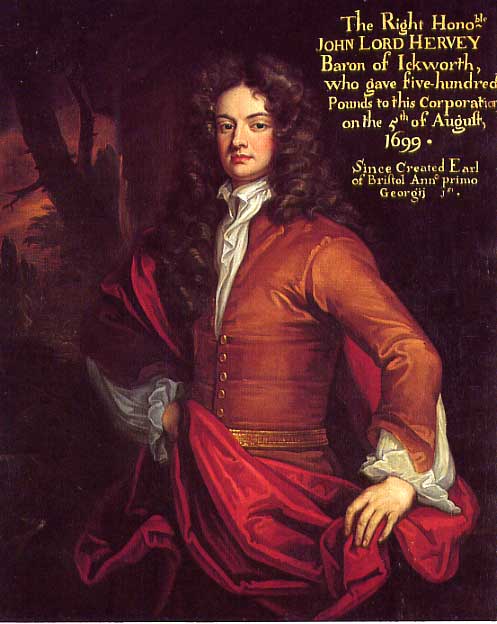
I have been reading the Memoirs of Lord Hervey… but there, another book. I do have other things in my life, I allege. Why nobody has dramatised these memoirs yet I cannot imagine: they cry out for it. Hervey was Vice-Chamberlain at the Court of George II, or rather, at the Court of Queen Caroline, who was his major ally there, and anyway acts as Regent when George hauls off to Hanover to spend time in the nation he preferred, and with his mistress. Hervey commands a waspishness about the malfunctioning Royal ‘family’, and a fabulous regard for his own sagacity about these ‘purpled children’, as he calls them, that makes him the most entertaining and biased of witnesses. As you read – and this would happen if the Memoirs were dramatised – Caroline keeps mutating in your mind into Good Queen Brenda, the foul-humoured George II into her consort, and the Prince of Wales is the Prince of Wales, rendered as an object of contempt.

Frederick, Prince of Wales, never got to the throne (George III was his son). He seems to have manoeuvred for popularity, and thoroughly alienated his abjectly German father and mother by doing so. Hervey is completely in accord with the Queen about ‘Fretz’ as an object of contempt. The two men had quite a back story: a possible liaison between them, and a shared mistress in Anne Vane.

In one stupefying passage, the Queen is trying to get Hervey to disclose from Anne Vane’s conversations, or worm out of Lady Dudley, another reputed mistress of the Prince (by seducing her), if her son is really capable of fathering a child on his wife, Princess Augusta. She is aware that the Prince’s political ambitions make him willing to do anything to have his spouse produce one. Could Hervey, for instance, father one for him:

'Do you think then you could contrive, if he and you were both willing, without her knowledge to go to bed to her instead of him?’ ‘Nothing so easy’ ‘My God, how is it possible?’ said the Queen. ‘Why, for a month before and after the time of putting this design in execution I would advise the Prince to go to bed several hours after his wife, and to pretend to get up for a flux several times in the night, to perfume himself always with some predominant smell, and by the help of these tricks it would be very easy, not using himself to talk to her in bed, to put the change of any man near his own size upon her that he pleased.’

There it is: the Shakespearean bed-trick, really thought through. In the end, Frederick does seem to have managed on his own. With his wife in labour, her waters ('filthy inundations', Hervey calls them) breaking in the coach, he hastens her to St James’ Palace, because he is determined to have her deliver a London-born Prince. As Hervey puts it in his inimitable style: ‘At a quarter before eleven she was delivered of a little rat of a girl, about the bigness of a good large toothpick case, none of the Lords in Council being present but my Lord President Wilmington, and my lord Godolphin, Privy Seal’. You’d have thought two witnesses quite enough for the poor woman to have to endure, but Hervey is caught up in the Queen’s fixation that the Prince cannot have fathered the child, and that ‘a chairman’s brat’ will have been smuggled in (though she later concedes that ‘this poor, little, ugly she-mouse’ persuades her that it is a bona-fide offspring of ‘my filthy beast of a son’, while a ‘brave, large, fat, jolly boy’ would have confirmed all her worst suspicions).

Of course, television might mess it all up. The BBC would never cast a quasi-British Queen as quite the neglected 'fat Venus' Hervey describes, or show George II as being as insufferably tedious as Hervey makes him. Fairness and loyalty would intervene. Channel 4 might get someone as epicene as Hervey, and might have the nerve to carry it all through. It would be construed as the most outrageous attack on the Windsors.

Sunday, February 12, 2006

Fossils in literature


Maybe I qualify myself (as a fossil in literature, that is). My friend Simon accuses me (well, not in so many words) of having outed myself in this weblog as a fellow whose interests are mind-numbingly tedious. I defiantly hurl into the vast abyss that is the internet another of the little things that happen to catch my attention. I was reading a 17th century book by Richard Brathwaite, The Honest Ghost (1658). In it, he has a satire on lawyers entitled ‘The Judiciall Ape’. A lawyer speaks, and in the course of this, having talked about how his bribes have as a matter of decorum to be delivered via his manservant, remarks next how his clients, when they finally get to see him

finde me in Majestick sort,
Starching my beard, or reading a Report.

While each of these more scurvy Court’sies makes
Then upon Whitby-Strand are shapes of Snakes…

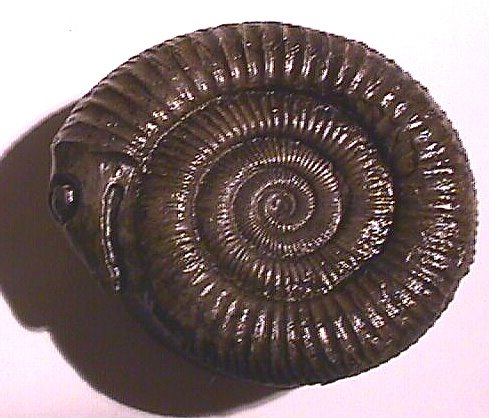
I don’t recall seeing an earlier allusion to ammonites in literature. Brathwaite was brought up on the other side of the country, but eventually had property in Yorkshire, and, I suppose, his out-of-the-way simile comes from some local knowledge. The idea is first of all about number, but also about the curled-up bowings, the 'courtesies', with which the wretched clients greet their lawyer. It is hard to imagine the profusion of Liassic ammonites, back in the centuries when nobody much bothered picking them up. The not unreasonable attempt at reconstructing the creature involved unrolling the ammonite (in your imagination), and finding a snake; you then spun the yarn that St Hilda of Whitby, rather than banishing the snakes like St Patrick did from Ireland, turned them into stone. As part of the substantiation of this, the outer whorl of a dactylioceras would be carved into a snake’s head. I took the image off www.baystatereplicas.com
where they have them for sale - real fossils, but carved in their labs. These might be thought of, then, as fake-fakes, rather than authentic early fakes. If they could only produce a plaster or resin version, it would be a fake-fake-fake.

Thinking about this made me recall my favourite fossil in English Literature, the trilobite in Thomas Hardy's A Pair of Blue Eyes. In chapters 21 and 22, Henry Knight finds himself precariously positioned over the abyss of a North Cornish cliff. He knows he cannot hold on, the girlish heroine, Elfride Swancourt, has apparently run to get help from a distance that cannot possibly arrive in time to save him. As he hangs there,
By one of those familiar conjunctions of things wherewith the inanimate world baits the mind of man when he pauses in moments of suspense, opposite Knight's eyes was an imbedded fossil, standing forth in low relief from the rock. It was a creature with eyes. The eyes, dead and turned to stone, were even now regarding him. It was one of the early crustaceans called Trilobites. Separated by millions of years in their lives, Knight and this underling seemed to have met in their death. It was the single instance within reach of his vision of anything that had ever been alive and had had a body to save, as he himself had now.
Hardy loved to place his characters against a vast expanse of landscape, or of time, to affront them with the indifference of nature with no God behind it, like the pools on Egdon Heath, full of tiny life, which confront the character dying of heat-stroke (in The Return of the Native). Hardy once went to see the can-can dancers in the Moulin Rouge, and so positioned himself in the audience (or so he claimed) that, through a stage door left open, he could see the graves in Montmartyr cemetery. Henry Knight confronts the extinct, as he faces his equally trivial extinction.

Here's a link to James Abbott Pasquier illustrating the first part of the episode in the 1873 serial text (this is before the plucky Elfride reappears having taken off all her undergarments, she tears them into strips, and twists a rope out of them... sorry about the spoiler there. Henry Knight is amazed at how girlish her figure is when she is reduced to just her topmost layers - she chastely won't walk beside him after the rescue, but he is well placed to size her up).

http://www.victorianweb.org/art/illustration/pasquier/6.html

and here, Richard Fortey kicks off his Trilobite: Witness to Evolution (2000) with an atmospheric pilgrimage to what has to be the same cliff near Bocastle:

http://www.nytimes.com/books/first/f/fortey-trilobite.html

In noting Hardy's imaginative licence (no trilobites have been found in these Carboniferous shales), Fortey drops a little stitch himself: Henry Knight almost falls off the cliff, Stephen Smith is the rival lover to Elfride (Knight's name projects class privilege, while Smith's captures the chip on Hardy's shoulder, for Hardy is dealing with his wooing of Emma Gifford).


Wednesday, February 08, 2006

Colour-banded Carboniferous Bivalves


Well, there's a title to get the readers flooding in! But I use this blog as a small act of expiation: when I was a teenager, I would cycle over into the Peak District, Derbyshire, and diligently collect fossils, mainly from the region of Castleton, in the Visean stage B2 limestones. These were fossil reefs from the Carboniferous sea. I've read that where conditions for fossilisation (because of the living animal's normal habitat) are poor, the fossil record perhaps represents 5% of the fauna: but in such locales as a reef limestone, the fossils perhaps show more than 90% of the animals. I picked up some good fossils, at Cow Low, and over at Giant Hole, and some from Parkhouse Hill. In the main, I took them from blocks scattered in the rough pasturage: I did not hammer too much at actual outcrops. Or maybe I did, it is a long time ago now. I have essentially given up field collecting. Among my fossils, I still feel guilty about a particular group of spectacular preservations. These are of bivalves ('Aviculopecten' and, I think, 'Pterinopectinella'), brachipods ('Dialasma hastatum'), and gastropods ('Mourlonia carinata') which retain traces of their original coloration, oh, just a matter of 320 million years on. So, at last I can show something of them to the world, and maybe a researcher might stumble upon them in doing a google search. He or she can get in touch with me.

Tuesday, February 07, 2006

Hello Sevylor?


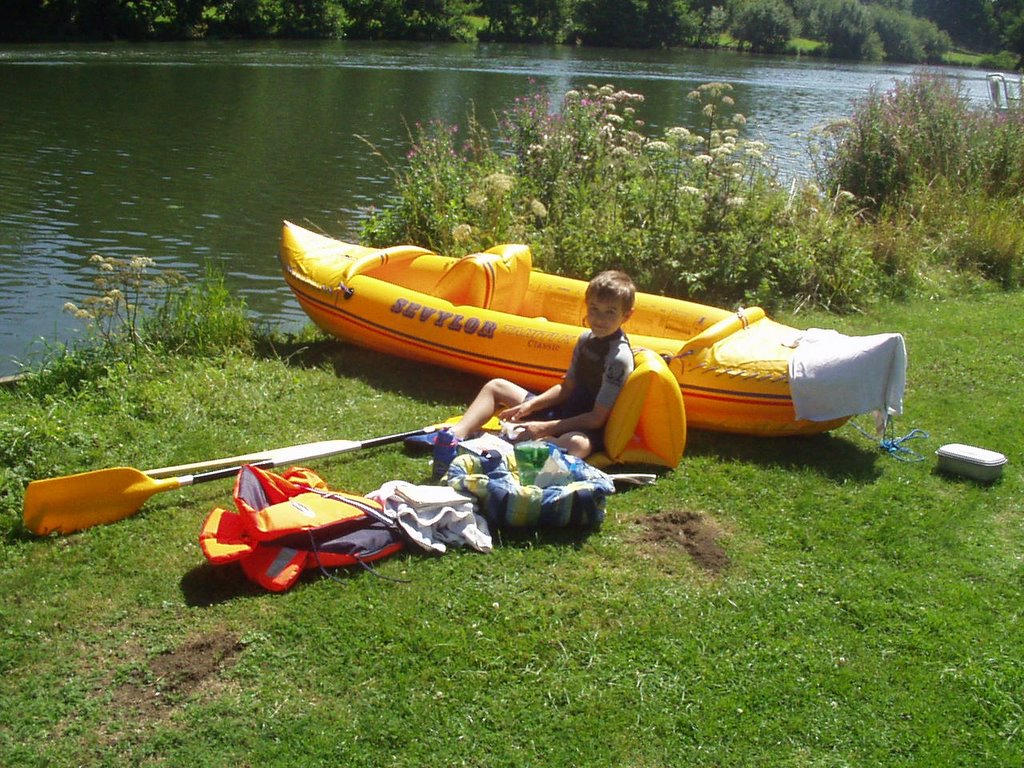
Adventurous life in two interpretations: on the left, my son Tim hauled up onto the Thames riverbank amidst a strew of sandwich boxes and towels, and on the right some over-achieving type of fellow approaching the Arctic pack ice, with the same model of rubber canoe floating as if in the air, so pellucid are the waters. I bet he had a cold backside, though. I think I enviously scooped the right hand image off http://www.photo.net/photodb/photo-of-the-week/
somewhere, as that is one of my favourite photographic sites, but I cannot find it again. These canoes are massively stable in use, though the pontoon sides mean that your paddling has to be steady. As they rather sit on the water, than cut through it, there's no point digging in too hard. You can paddle surprisingly well against a current, but a head wind can be wearisome. The great thing is that they deflate into a roll that you can just about carry, and which pops into a car boot. On summer evenings I sit in unfrequented backwaters of the Thames, watching kingfishers (and wondering why I don't ever meet any nice women!). http://www.sevylor.com/canoes.html

An update: I found that image again: it comes from http://www.wildthingsphotography.com
The photographer is John Hyde, and he makes Alaska look like the most beautiful (cold) place on earth. Marvellous site, showcasing ravishing images.

Thursday, February 02, 2006

Tim Hilton: Gentleman Cyclist

It’s life as we know it, Tim!

A review of One More Kilometre and We’re in the Showers: Memoirs of a Cyclist by Tim Hilton (Harper-Collins, 2004) (£16.99 hb, pb edition forthcoming).

Here’s the book the regular ‘Less about Lance, please’ correspondents of Cycling Weekly would certainly relish. Just two passing mentions of the American (and those merely in lists of names), similar short thrift for that conspicuous mismatch between achievement and personality, Miguel Indurain, and no space at all for that talent increasingly interesting in its failure of fulfillment, Jan Ullrich. Here, instead, are two of Tim Hilton’s keynotes: “a club cyclist … by this term I mean someone who is dedicated to the culture of the bike, as well as being a member of a club” (p.8). And, “cycling is not merely about physical pleasure. It is also about knowledge and living memory: the memories we can share with those who are still alive” (p.64). This nostalgic, highly personal account of a life-long preoccupation with the bike inevitably reflects the professional racing scene, but only as it has swayed his particular imagination over the years. That his hero was Fausto Coppi leads him to make, without parading any such intention, a persuasive case that this was the greatest cyclist of all time. Anquetil is there, but really only because he had the good sense to learn from Coppi. The Reading CC chairman saw Coppi at Herne Hill (this was the 14th September, 1958, Hilton says), and still describes with relish the sound of Coppi’s tyres swishing under the impetus of the supple, powerful pedal-stroke described here. At that moment of communion (did the whole stadium relish that same acoustic pleasure, as it is a sound eloquent to any practised rider?), Hilton too was of course present.

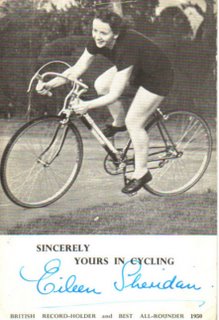
Hilton loves most the riders whose characters he can describe: Louison Bobet’s long road to the top, the bloody-mindedness and finagling of Reg Harris, Alf Engers ‘white-lining’ his way to the first 30mph 25 mile Time Trial, the gregarious Ray Booty serving out bacon and eggs for the also-rans at his primus stove after another triumph. Veterans and ladies are as celebrated as any famous male riders riding in their prime. A marvelous chapter on the delightful and valiant Eileen Sheridan, hallucinating her way through the last agonies of her 1,000 mile record after setting the end-to-end, while her supporters wept, sang, ran alongside (even proposing to her!), is complemented by a respectful but rather head-shaking account of the extremist Beryl Burton at work (rhubarb-forcing, it seems – from what one reads, after Beryl Burton and her trainer-employer Nim Carline had forced a rhubarb, it would probably have been a stick that could hand it out), in her training, racing, and in her sudden death.

Hilton, an art-historian, also loves the iconic moments of the sport: Rene Vietto’s tears after a Tour-losing piece of self-sacrifice, the ever-reckless Simpson running out of luck, strength and life on Mont Ventoux. He also has a fine ear for the Homeric utterances of the great riders: Eddie Merckx’s comment on Liege-Bastogne-Liege (which he won five times) was the superb: “If the Tour of Flanders had been that hard, I would have won that race more often too” – Achilles could not have put it better.

The style of narration makes the book always interesting and unpredictable, for Hilton grandly follows his own preoccupations: as he thinks that the particular rituals of club life, down to the protocols of cross-toasting at club dinners, have to be recorded, they are, in loving detail. The story of the inception of the Isle of Man week, and its nature (“land of kippers and fairy lights!”), gets his full attention. He knows his roads, and loves to evoke France and the other heart-lands of cycling, caught in some vivid phrases (“the Flemish national character is opposed to hairpin bends … Spring in Flanders is a specialised form of Winter”). He traces the pave tracks around Roubaix with the reverential intensity of one of Bruce Chatwin’s Aborigines following a songline; the route has for him a “historical resonance” which almost occludes the present. The race, or ordeal, is an annual ritual, with an occult compulsion of its own, its running a dreamtime possessing the whole Flemish nation.

There is no attempt to be inclusive, either as a historian of racing, or as a social historian of cycling in Britain. There are some parts of the book which perhaps show Hilton dutifully doing his bit, where many others have written before him (especially on the Tour itself). But this book is more concerned to record, before they are forgotten such things as: the singing club run (which died out in the 50’s, he thinks); cycling poetry; how former Desert Rats founded the ever-dwindling Buckshee Wheelers; long-lost cycle-tracks (including, to my amazement, the one where I once saw my late father do rather well in a slow bike race, at the Staveley Works sports ground); and tales of the perhaps wholly legendary Rosslyn Ladies Cycling Club.

Hilton’s style, too, is the man himself. He loves to tell you a fact, and tries elsewhere to make his own opinions sound as much like facts as possible. At times, you have to wonder who could have reported the things that Hilton so authoritatively asserts as seen and said. Did a novelistic impulse fill out the advice of Louison Bobet’s brother to a rider desperate for Tour success, and humiliated by a series of defeats (p.221)? You wonder whether his detailed account of the day to day routine of Frank Patterson hasn’t been lifted by fancy too, maybe as a deliberate tribute to the artist, imitating him in words as persuasively evocative as the illustrator’s own spindly pen-strokes, shading off into expanses of white paper suggestive of the unknown distance. Hilton points out how the intensely unsociable Patterson habitually depicted cyclists (usually solitary, and almost invariably men) finding their way across what can be interpreted as the half-emptied rural England after World War I. Are they revenants swathed in cycle capes, dead Tommies still riding in their puttees, or haunted survivors? Hilton reveals that Patterson always worked up such images from photo postcards, capturing the essence of cycling – and maybe something else – but never himself participating.

Our author too may be meticulously recording the past, but isn’t so obsessive as to exclude the future. In fact he quite explicitly seeks his younger self: before a spring classic, he believes he sees himself, rejuvenated in the shape of a reporter interviewing the riders, until the discovery that the group of young men are talking about what he terms, in distaste, ‘disco-music’ dispels the pleasant illusion. The book ends when Ulysses finally meets Telemachus: a young man chats to him while waiting to pass up a bottle at a Junior Road Race Championship. “Rarely have I seen a young person look so eager and happy”, affirms the author. Confident of his future prospects on the bike, secured for happiness by an attachment that has been Hilton’s own, the unnamed lad finally confirms his membership of the two-wheeled elect by announcing that he has just secured a job as a postman.

On clubs themselves, Hilton is both loving – during a longish trawl through his list of club names, he pauses briefly over a club ancestral to the Reading CC, the ‘Bon Amis’ (briefly noting, without any teacherly admonition, the bad French grammar in that non-agreement between adjective and noun). Clubs, he says, in a survey of the likely personnel, have “too many schoolmasters (who often are their club’s secretaries)” – so that’s me in my place then. He avers that the maximum size for a club is 100, the optimal size about 80. His bald assertion that beyond 100, a club is bound to split, has half-worried me, such is the authority with which he makes his pronouncements

And he is right to want to record a culture that is changing, or even disappearing. Time trial classics that have gone, particularly the Bath Road100, ‘haystack nights’, 21,000 cyclists converging on Meriden, at the geographical heart of England (this was in 1921) for the one of the annual cyclists’ memorial services: things like these come under his compendious remit. Alongside such things, he always tells of the doing of great deeds, and always of Coppi. Fausto training in the Alps, for instance: eight team-mates would set off up the chosen col, at one minute intervals. Then Coppi would follow, pass them one by one, and ride on up to the top alone. For ours is a heroic sport. We are a clan that orally retells the achievements of the great riders almost as fervently as the bards told of Beowulf’s exploits. We still have, in club-room, village hall, or café (rather than the meadhall), the Anglo-Saxon mode of ‘the boast’: telling what you will do, and then making the effort to live up to it, once in battle. So, hail Tim Hilton: cycling’s elder, re-teller, witness, bard: or to give him the accolade, from French usage, that he would most wish, and deserves, gentleman cyclist.
Monday, January 30, 2006

The Great Cycling Novel


“On a bike, your consciousness is small”: a review of The Rider.

Meyrueis, Lozère, June 26, 1977. Hot and overcast. I take my gear out of the car and put my bike together. Tourists and locals are watching from sidewalk cafés. Non-racers. The emptiness of those lives shocks me.”

That’s the opening paragraph of Tim Krabbé’s novel, De Renner (1978), translated out of the Dutch by Sam Garrett for a 2002 Bloomsbury paperback, The Rider (0-7475-5941-4; £6.99). Instantly, we are at the beginning of the action: the novel will follow, kilometre by kilometre, a top amateur race in the Gorges du Tarn region of France. And we are thrown just as decisively into the protagonist’s state of mind – the monomania of the racing cyclist, who scorns everyone but those who, among his own kind, race in the way he recognises and esteems.

A friend lent me a copy of this novel late last year. It is a book that should be read within the duration of the race it describes. As the kilometres and the cols go by, the narrator (Tim Krabbé indulgently re-imagined by himself as a real contender) is in the breakaway group that must produce the race winner. With him, finally, are a fellow spirit, Kléber (‘He lives to ride’), an immensely strong veteran, Lebusque, and a wheelsucker ominously impervious to all admonitions, the youthful Reilhan. Around Krabbé, a wraith-like peloton of the great riders travel along with the hero, as their examples, their adages, and his fantasies of emulation goad and sustain him. The rhythm of the book in part captures the growing exhaustion of the hero, as his reveries become increasingly prominent as he rides to his physical limit. As only the best stories can bring about, the reader is in conflict between taking the time to enjoy sufficiently the insightfulness of every page, and the urge to rush ahead to reach the finish – will he get it, the big win that his choice in life has led him to and now brought him in sight of, the win he deserves?

The Rider is immensely convincing: this race had to have happened, and had to have been ridden out exactly as told. About half way through my reading, I decided that I had to follow the narrative on a map as well, and only when I found that I could exactly follow the race in the Michelin road atlas of France, and see the kilometerage of the race coming exactly off the page, did I think that I was actually looking at an imaginative writer’s research. Further research of my own into the author himself revealed that he had indeed been intensely fascinated with cycling, but in his prime was just too bulky a rider to have been ‘de Renner’ of the novel.

‘The rider’, whose body is a subject as deeply fascinating to him as his mind. He describes training harder and harder, and says of his body as it adapts to carry out his will, ‘I was touched by its loyalty’. He attacks in the race, and says this (and this is typical of Krabbé’s vividity) - ‘The decision catches me off guard. The way you can mull endlessly over getting up in the morning – and suddenly find yourself standing next to the bed. Your body got up, and you were in it’. ‘Why do I do it?’ he asks himself, over and over, amid the epic suffering that an 85 mile race over long climbs can inflict. And he allows himself an unrestrained expression of bike sentiment by way of answer: ‘after the finish all the suffering turns to memories of pleasure, and the greater the suffering, the greater the pleasure. That is Nature’s pay-back to riders for the homage they pay her by suffering.’ People in general, he reflects ‘still have bodies that can walk for five days and four nights through a desert of snow, without food, but they accept praise for having taken a one-hour bicycle ride…’ And isn’t it true, that many people go through life just ignorant of what their bodies can do, while the bike, in our otherwise over-comfortable lives, informs us exactly about what we might achieve in a proper ordeal?

‘I am a hero, you see’, reflects our hero: the novel admits us to that private confession. Does the novel know about a cost in this solipsistic self-realisation? Krabbé’s other novels are The Vanishing and The Cave. As a professional academic, I’d never let a small detail like never having read either of them stop me forming a surmise about them. What you remember from the former novel (in film form) is that the hero, so as to know, consents to have the abductor of his girlfriend repeat on him whatever it was that happened: and he wakes up from a sedative drug buried alive in a coffin. You choose to enter a cave, a cave doesn’t just happen to you: the hero of de Grot is an academic who descends into drug smuggling, loses his moral bearings in pursuit of money to fund an excavation. Krabbé has to be interested in the self-knowledge found among decisions made against normal inclination, and a kind of liberation amid vanishing options. The rider traverses an immense landscape, but is the prisoner of his own obsession: at one point, the alienation expressed in that opening paragraph flashes out in sexual form, in his sudden hatred of a pretty girl whose encouraging shout interrupts his reverie, and draws his bilious attention. His chosen form of fulfilment may or may not arrive at the end of 137 kilometres.

The author’s main fame is as a chess expert, who has assembled a collection of the most amazing chess moves of all time. The Rider makes some explicit analogies, in its attention to the fluctuations of a race: a racer, like a chess player, can always make a sacrificial move. We see move countering move, the attempts to make the opponent make the wrong play, the disbelief when a great position evaporates. Always, Krabbé writes brilliantly about the opacities of decision-making. The hero cites Henri Pélissier’s impossible imperative: ‘Always attack as late as you can, but before the others do’.

You will all know that the Dutch love their cycling, and also, being an intelligent people, they love the literature in their language. This, charmingly, has precipitated the fictional ‘Tour de Mont Aiguoal’ into reality. The race that Krabbé invented now exists, at least as a cyclo-sportive, when hundreds of Dutch enthusiasts enact on the real roads the pages they read (details at http://www.imagesportmarketing.nl/rondevantimkrabbe/ - it will be promoted on June 9th in 2006). Krabbé himself apparently had the salutary experience of realising that he was simply too overweight (at its first running) to attempt to ride the route on which he had imagined himself contesting a race win. He has since, as you see from his photograph below, got into good enough shape to participate in his own dream. This is nice, but in the end, has to be an instance of the reality being somehow more fictional than the utterly authentic fiction that inspired it: Krabbé’s brilliance dooms him to having been more of a road racer when writing a book than he could ever be when riding the roads in actuality.

The picture seems to be Tim Krabbé with a few accomplices recreating the finish in Meyrueis - in a way. This is the author's own website http://www.xs4all.nl/~timkr/
It is in both Dutch and English. No more cycling fictions, unfortunately - but he had written the book.

Saturday, January 28, 2006

Save the Donne, says Germaine

The famous image of John Donne as a melancholy lover, which the National Portrait Gallery has launched an appeal to buy for the nation: http://www.npg.org.uk/live/prjohndonneappeal.asp


Germaine Greer has clearly been asked to crank something out about this business: her thoughts are in The Guardian, and in the on-line Guardian at http://books.guardian.co.uk/departments/classics/story/0,,1696447,00.html
Now, I have a lot of time and respect for Germaine Greer as a scholar. Her 'Sex and Destiny' book is the one I learned most from, and her art history is important. As a friend to Donne, she is a very valuable person to have on-side. Far too much scholarship on Donne involves the academic carefully positioning herself, or himself, as most especially sensitive to gender politics. In a case like that of Stevie Davies, who did a monograph on Donne for the British Council, the effects can be sad (her account might as well have been titled, 'Why I hate John Donne and all that he stands for'). A contrarian in Dr Greer makes her reluctant to cite Donne only as a negative example. Elegy 19, 'To his Mistress: Going to Bed', usually hauled out these days from its cell to be arraigned for its deplorable attitudes, she saw freshly enough to pitch as a matrimonial poem, in Michael Hattaway's big Blackwell's anthology on Renaissance Literature.
Her present piece on the Donne portrait has the same 'but MY opinion is' type of argument: no, it's not about love melancholy, but this: "I think it relates to the beginning of the long and painful journey that took the poet far from the faith of his childhood, the faith his brother died for, into the strenuous realm of revolutionary Protestantism." The sort of fresh opinion she can be counted upon to give. At issue here is the "Illumina tenebr[as] nostras domina" legend on the picture, usually taken as a fine example of Donne's witty-blasphemous manner: not, 'Lord, lighten our darkness', but 'Lady, lighten our (with 'my' understood) darkness' - redeem me from misery by having (sexual) mercy on me. The Guardian piece leaves the status of the legend floating. An early witness who saw 'Domine' not 'Domina' is cited. Thomas Morton saw only what he expected to see, and saw wrong, as Greer says. 'Domina', then, 'Lady' - well, a Catholic Donne might well have asked the Virgin Mary to show him the light, but that was a request hardly likely to end up with him becoming a Protestant. And (as Greer does register), you could hardly think that even the B.V.M. would be safe in the company of this man.
No, not enough following up on the consequences of her opinion to convince this time around. Donne, who collected pictures, displayed a remarkable control over his own image, from the minature at 18, and on through the portraits of himself as baroque preacher, and up to his famously being sketched posed in his shroud. No, I think Donne, not short of ego, had a gallery of himself. It would have been arranged as a 'Seven Ages of Me' - a lost drawing of JD as infant, Donne at 18, Donne as lover, Donne in early and later middle age, elderly Donne, and Donne (finally) as cadaver.
Of course the NPG should have them all, especially this, the most appealing of them all, 'my picture taken in the shadows'- I will put in my tenner!

1001 **** you must **** before you die

I just hauled a fat '1001 things you must see before you die' book back to the library. Yes, looking at pictures again, while trying not to consider the assymetry building up between places seen and years remaining. There on the shelves was '1001 Golf Holes You Must Play Before You Die'. Now there's an imperative I can happily ignore. '1001 Films to See'? '1001 Albums You Must Listen to'? (Hang on, I'm still working through the films) '1001 Books You Must Read'? (I know, I will watch the film, while listening to the album, with the book on my knee). The formula seems to be tenacious. My '1001 things you must see' tome seems to be one publisher trumping another's mere '1000 places' effort. Other efforts in the crowded field seem to have been written by what seem to be, in this area of frantic exhortation, innate pessimists: Can 'Ten Fun Things To Do Before You Die' really sell well? http://bbbsny.org/uk/1025/0786885475/Ten_Fun_Things_to_Do_Before_You_Die/
has this commendably sober volume, and a few of its more blissed out competitors.
I haven't yet seen the parodies that surely cry out for publication, of the '1001 Things You Must Die Before You Do' kind: '1001 Narcotics, etc'. Actually, the Golf Holes Book might be the first. '1001 Shopping Malls You Must Visit'? (No, won't do: no trace of irony could survive publication, far too good a real world idea). '1001 Insurance Salesmen You Must Meet (etc)'? '1001 Things You Must Muddle Through As Best You Can Before You Die'? Well, yes, tell it like it is. The happy thought is that someone, somewhere, has to be grubbing together the sex-related '1001' volume even now...

O Rare Will Davenant!


I was putting on a fake rant a couple of days ago to provoke one of my postgraduate students (“Davenant is really the wet rot in middle 17th century literature: stopped in one place, he’d just re-appear in another, making form after form artistically uninhabitable: risible tragedies, piffling epic, disjointed masques, leaden comedy. As poet laureate, he set the standard, and they all slid down-hill with him.”) My favourite piece of Davenant is what he did to Macbeth in about 1664. He was a theatre manager in the Restoration period, so he had to boost up the roles of that terrific new addition to the theatre, the professional actress. So, he set about giving the play a few softer, feminine touches. Mr. Macbeth sends his letter about the prophecy to Mrs. Macbeth, and we find her in possession of the letter, but also in dialogue with Mrs. Macduff. This scene starts politely:

Lady Macbeth.
Madam, I have observ’d since you came hither,
You have been still disconsolate. Pray tell me,
Are you in perfect health?

But having got Lady Macduff on stage for this 17th century rendering of ‘Desperate Housewives’ (for she is frightfully worried about all this horrid fighting the menfolk are up to), Davenant must get her off again, as Lady Macbeth has to read the letter alone. She confides this to the audience:

(Her presence hinders me; I must divert her.)
If you are ill, repose may do you good;
Y’had best retire; and try if you can sleep.

There, you go and have a little lie down, love. Besides a whole lot more of the Macduff’s, Davenant reckoned that Shakespeare just didn’t give enough to the actress playing Lady Macbeth. So in his version, she is troubled by visions of Duncan’s ghost (“Macbeth. ‘How does my gentle Love?’ Lady Macbeth.Duncan is dead.’”). Davenant makes her – as a sentimentalized version of herself – into a moral being, who reproaches Macbeth for the murder. His Macbeth responds to this with, I suppose, a sharp intake of breath:

Macbeth.
Can you think that a Crime, which you did once
Provoke me to commit? Had not your breath
Blown my Ambition up into a Flame
Duncan had yet been living.

But there is no stopping her, she has an answer for that:


Lady Macbeth.
You were a man,
And by the Charter of your Sex you shou'd
Have govern’d me, there was more crime in you
When you obey’d my Councels, then I contracted
By my giving it. Resign your Kingdom now,
And with your Crown put off your guilt.

Davenant then pretends that he hasn’t written the lead-in to a fantastic marital row; Macbeth merely goes off to consult the witches, whom he probably finds more reasonable and understanding.

It would be interesting to have a production, say on April Fools’ Day, smuggle the Davenant scenes into a modern Macbeth, just to see how long it was before people noticed.


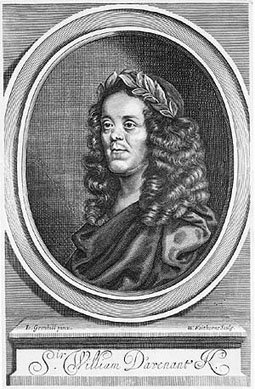
Davenant's chief fame is as English literature's notorious victim of the pox. As Thomas Randolph was then famous for losing his finger, Davenant was famous for losing his nose. Doubtless the portrait (above) flattered what remained to him. He seems to have recovered, and had nine children by his third wife - even in those rather haphazard times, it is hard to imagine so large a family if the children were all born ill with the disease, like in an Ibsen play. I understood that mercury treatment only suppressed symptoms of syphilis, rather than curing it. Maybe Davenant suffered some fever in which a pyrogenetic response by the body finished off his major ailment.

Thursday, January 26, 2006

Thalassa, thalassa!


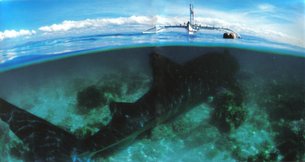
The Sea! The Sea! The new contemplative me increasingly finds books with words in them too taxing... this was my favourite image in a 'Cube Book', called simply, The Sea, 700+ pages of photographs of the sea, its creatures, seasides, islands, sea-peoples. White Star Publishers put it out (£13.95). The photographers were largely Italian, the text is minimal, and so yes, it is a gift book which will have been marketed across Europe, while the deliberate attempt to make the over-fat book as much like a literal cube as possible means that the spine will not hold out forever. But it is full of vivid images, like a set of National Geographic magazines stripped of frenetic text. I've traduced the image above, by crudely cloning out the binding seam that runs up the opening, and the camera has played a trick, magnifying even a whale shark. A fisheye lens and refraction conspired together, but you will never see better captured that 'You never know what is down there' sensation even the calmest sea provokes. Posted by Picasa

Wednesday, January 25, 2006

Birds Britannica


I am reading, with astonished interest, Mark Cocker and Richard Mabey's masterpiece. No, I have never 'twitched', but I am always happy to sight a bird. Uncommitted and half interested people like myself will have had bird guides in their hands, with their dutiful box ticking of range, plumage, song and the rest. This transcendent book is a cultural history of every bird that has been sighted in the British Isles, from Albert the Albatross to the commonest avian. The folklore, economics, rise or decline, taste when eaten: every facet of the interaction between a species and the British is recorded, along with anecdotes from particularly remarkable sightings: the birdwatcher whose captivity in a prisoner of war camp was alleviated by the chance for sustained observation of a pair of redstarts perhaps best sums up the loving attention birds have been given. Coming at the book from my 16th century specialism, that sense you get from Elizabethan literature of nature's lost plenitude is abundantly confirmed, with accounts of the numbers of now rare birds that could be trapped in previous centuries. What could England have been like, its rivers full of fish, and birds, ubiquitous, in a variety that compelled knowledge? Because of lecturing on Keats, the one bird I really felt I could test the book on was the nightingale. Everything is there, except for the fact that Beatrice Harrison is playing 'Danny Boy' to the nightingale's counter-song, in the famous first ever BBC outside broadcast - hear it on http://musicandnature.publicradio.org/features/
Anyway, at £21 from Amazon, this is a fantastically enriching book.

Tuesday, January 24, 2006


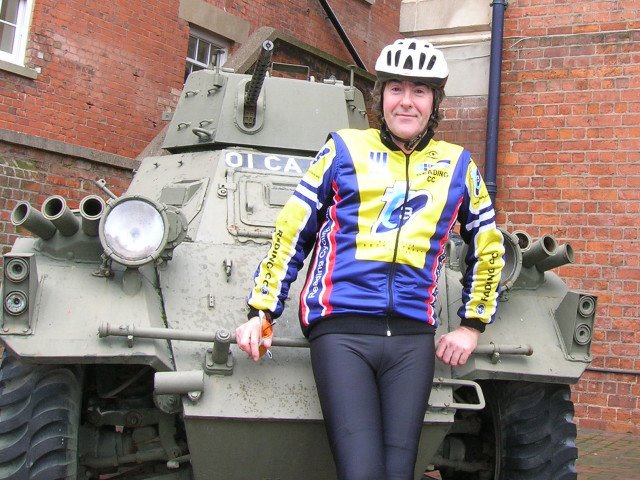
Dr Roy: pedals through life in an armoured car
Posted by Picasa

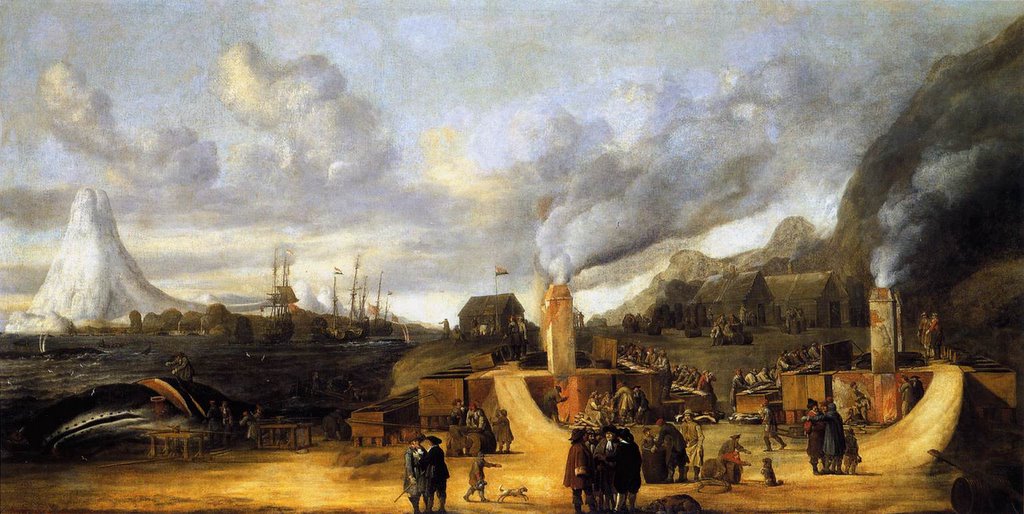
Cornelis de Man's whale painting

Continuing with thoughts on whales, this is a Dutch painting of 1639, of whales being flensed and reduced to whale oil in Spitzbergen. It is in the Rijksmuseum. Not the kind of thing you expect to see in an oil painting, but Dutch art had adapted itself so flexibly to recording realities, that, on second thoughts, it appears inevitable that such a subject would be executed. These would be 'Right' or bowhead whales. It seems that the fishery (mammalery?) was effective in the usual unthinking way of these things. According to the History of Whaling on the Wikipedia site http://en.wikipedia.org/wiki/History_of_whaling
Spitzbergen and Jan Mayen Island were fished (or mammaled) out by 1645. I mean to check if Keith Thomas's Man and the Natural World, 1500-1800 has anything about whales in it - I do not recall any, but this wonderful book explains the ideology behind such reckless exploitation.
I'd come across the painter before, using his 'The Chess Players' in a lecture I give on Thomas Middleton's Women beware Women which has a chess-playing scene (see the painting at http://www.wga.hu/html/m/man/chess_pl.html ). This is quite a sharp painting of a formalised battle between the sexes - the girl looks back at the viewer, and gestures to the male opponent she has just outwitted. A prominently belled cat makes a further point about the male as failed predator. But how de Man ended up painting a scene from the artic circle no-one explains. Did he voyage up there, or work from sketches brought back?
The Web Gallery of Art locates this scene (in their information pane on the painting) on Jan Mayen Island. But the setting is definitely 'Smeerenburg' ('Blubber-Town') in Spitzbergen ('Sharp Mountains'), with the very distinctive 'Devil's Thumb' mountain showing. 'Blubber-Town' was occupied just in three summer months.

True and wonderful relations of whales


The tagging of last week's stranded whale, SW2006/40, made me think of earlier examples of whales that got into the Thames. On June 3rd, 1658, a genuinely large whale was sighted at Blackwall, near Greenwich. The brief pamphlet published about this unfortunate animal reveals large changes in the response of Londoners. Just as they did last week, people streamed out on foot, also by coach, and, very characteristically for London transport of the 17th century, by boat. But they travelled (at least, the pamphlet gives this impression), not to see the animal, but to see it being killed.

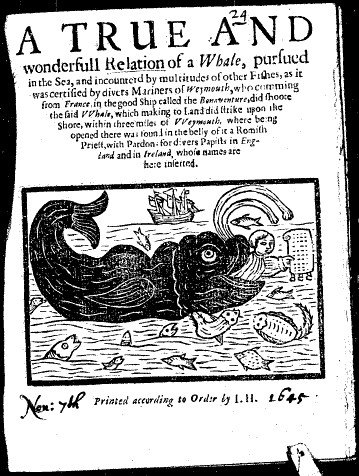
As the title page shows, it was instantly assailed, with all means to hand, and the pamphlet commends the "vigellency, care and industry" of the watermen, who finally killed it after a six hour struggle. This was not a stranded whale, but one that thrashed, leaped, and hauled the boats that had been used to fire improvised harpoons at it.

If you look at the wider field of references to whales in early modern literature, they are seen as, at the least, prophetic of storms to follow. A wider metaphysical dread attaches itself to them, here "this whale (coming thus contray to custom) is some sign or token of heavens displeasure" and "a sign of some dangers approach". As a "monstrous fish", the animal's natural bulk makes it, for them, unnatural, tainted by a fear both of itself, and what it portended. Hence their eagerness to see it killed.

Klaus Barthelmess, in his web-posted essay, 'Stranded Whales in the Culture and Economy of Medieval and Early Modern Europe' http://www.whaling.jp/english/isana/no27_02.html
(I don't think that we should necessarily judge a man by the company he keeps, but, really, Klaus) produces a word I'd not come across before, hierozoika a word for animals sanctified by being mentioned in the Bible. However, Jonah and the whale was not a story that conduced to helping the whale's image: yes, it was a Biblical animal, but typological readings associated Jonah in the whale with Christ descending into the tomb: the whale became deathly, and got itself associated via its vast mouth with the mouth of hell.

The Jonah story turns up in almost surreal form in another early english whale pamphlet, the one at the head of this post, with the not easily credited account of the dead Catholic priest being found in the carcass of a whale. In this passage from Ben Jonson's Volpone, the credulous Sir Politic Would-Be readily belives that a whale just has to be connected to some anti-English conspiracy:

Peregrine.
The verie day
(Let me be sure) that I put forth from London,
There was a whale discover'd, in the river,
As high as Woolwich, that had waited there
(Few know how manie mon'ths) for the subversion
Of the Stode-Fleet.

Sir Politic Would-Be.
It's possible? Believe it,
'Twas either sent from Spaine, or the Arch-dukes!
Spinola's whale, upon my life, my credit!
Will they not leave these projects?

Shakespeare has one very famous whale reference (the cloud that is "very like a whale") in Hamlet, but the really odd allusion in 2Henry IV, IV iv, is perhaps more remarkable, when King Henry IV advises Prince Hal's younger brother on how to cope. The elder prince is seen as dangerous, of a strength that cannot be countered, just allowed to play itself out, like a stranded whale's:

 Chide him for faults, and do it reverently,
When thou perceive his blood inclined to mirth;
But, being moody, give him line and scope,
Till that his passions, like a whale on ground,
Confound themselves with working.

In The Merry Wives of Windsor, the enormous Falstaff has turned up in Windsor, and this prodigy strikes Mistress Ford as equivalent to a whale getting as far up the Thames as to Windsor itself (Falstaff will end up thrown into the river, among other humiliations):

 What tempest, I trow,
threw this whale, with so many tuns of oil in his
belly, ashore at Windsor?

Let's round this off with a couple more early whales in the Thames references. These lines from the satirist Thomas Oldham, translating and adapting Juvenal, explain themselves:
A man of Faith and Uprightness is grown
So strange a Creature both in Court and Town,
That he with Elephants may well be shewn.
A Monster, more uncommon than a HitWhale
At Bridge, the last great Comet, or the Hail,
Than Thames his double Tide, or should he run
With Streams of Milk, or Bloud to Gravesend down.

(Oldham, John, 1653-1683: THE THIRTEENTH SATYR OF JUVENAL)

In the parodies published in 1673 as Ovidius Exulans,
the fate of whales caught in the Thames is reveealed: showmen buy up the body parts:
Or that great Whale was come up tumbling,
Through Br. with fearful noise & rumbling
To show himself with jaws so wide
In Booth at fair next
Bartelm-tide.
Klaus Barthelmess gives other examples of whale carcasses being exhibited. A student of Rubens undertook a less smelly mode of preserving the record, painting a minke whale at life size, a painting that still survives in the German Maritime Museum at Bremerhaven.